
News & Media




2025/07/24
692
Adsorber Vessels are critical components in pressure swing adsorption oxygen generation systems, in the structural design of adsorber vessels, ensuring both high efficiency and long service life are the two primary objectives.
Currently, conventional adsorber vessel predominantly adopts an axial-flow packed adsorption bed structure (also known as axial flow). The advantages of this design lie in its simple construction and low manufacturing costs. However, it suffers from significant drawbacks, including strong gas flow impact during intake and exhaust, large vessel dead space, bulky equipment size, and stringent requirements for gas distribution calculations. Due to the excessively large diameter of such adsorber vessels,calculating the distributor's orifice plate is challenging : if the plate is too thin, rigidity is compromised; if too thick, it becomes economically inefficient. The frequent cycles of pressurized intake and vacuum exhaust induce vibrations in large-diameter orifice plates, leading to the wire mesh loosening, rupture, and subsequent molecular sieve pulverization and fluidization. Consequently, this axial-flow design significantly increases the risk of premature molecular sieve degradation. This issue is prevalent in pressure swing adsorption (PSA) oxygen generation systems using axial adsorber vessels, contributing to their limited operational lifespan.
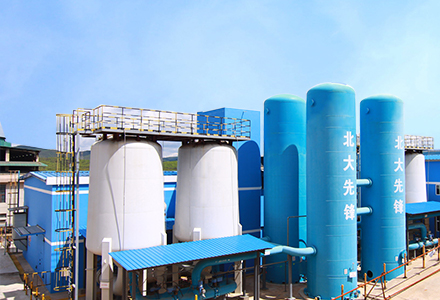
PKU Pioneer’s vacuum pressure swing adsorption oxygen generation systems predominantly adopt radial adsorber vessel structure for medium and large-scale installations, where air flows from the outer to the inner side of the tower along the radial direction. This configuration minimizes impact on the molecular sieve, ensuring more uniform and stable gas distribution. Radial adsorber vessel offers multiple advantages, including compact size, reduced vessel dead space, lower pressure drop, and excellent gas distribution during both adsorption and desorption phases. Even under frequent gas intake and exhaust cycles, the bed remains highly stable, drastically reducing the likelihood of wire mesh loosening, rupture, or molecular sieve pulverization and fluidization. Additionally, the structural design of radial adsorber vessels ensures full contact between the molecular sieve and incoming air. With a thinner adsorption bed layer, the radial-flow system requires less molecular sieve for the same oxygen production capacity while achieving higher adsorption efficiency, stable output, and consistent purity.
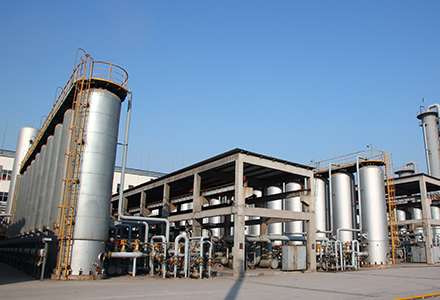
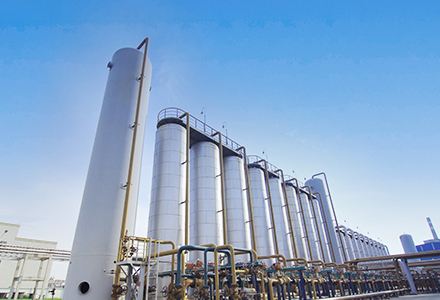
The picture shows Axial and Radial Adsorber Vessels.

In 2013, PKU Pioneer developed its first radial adsorber vessel pressure swing adsorption (PSA) oxygen generation device, which was successfully commissioned in a single attempt, supplying 93% pure oxygen to a leading Chinese fiberglass enterprise. The project has been operating stably for over 12 years, demonstrating that the stability and service life of PKU Pioneer's radial adsorber vessel PSA oxygen generation technology have reached world-leading standards.
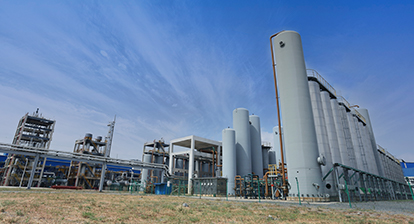
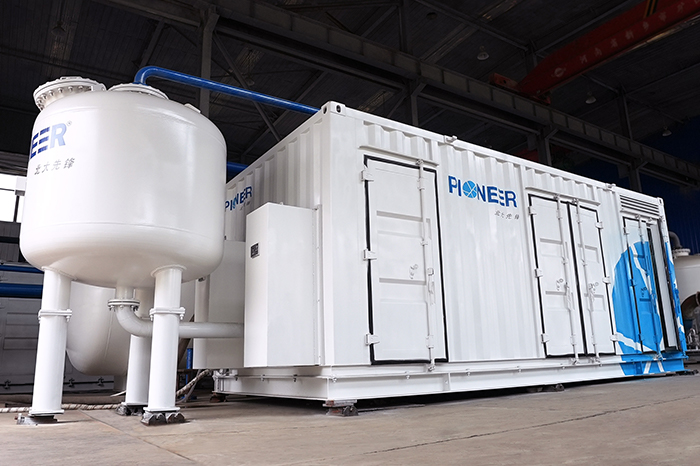
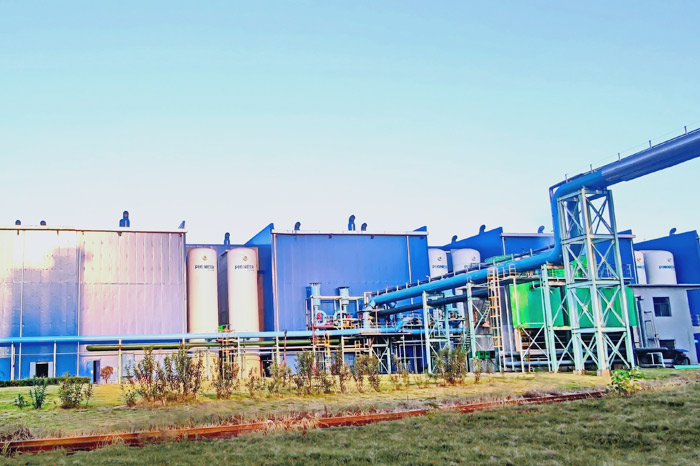
Since the successful industrialization of radial adsorber vessel, PKU Pioneer has exclusively employed this design in all its PSA oxygen generation systems. The company has executed over 400 large-scale PSA oxygen projects, with single-unit capacities reaching up to 100,000 Nm³/h, serving industries such as blast furnace oxygen enrichment, electric arc furnace steelmaking combustion support, full-oxygen glass furnace combustion, pulp oxygen delignification, and cement kiln oxygen enrichment. PKU Pioneer’s systems have been exported to more than 20 countries, including India, Russia, Brazil, Italy, and Germany, establishing the company as China’s most experienced and accomplished provider of large-scale industrial PSA oxygen generation solutions.