News & Media




2026/01/12
307
Based on the nature of interactions between adsorbates and adsorbents, adsorption can be classified into chemical adsorption and physical adsorption.
Chemical Adsorption
Chemical adsorption refers to the adsorption process accompanied by chemical reactions.During chemical adsorption, adsorbate molecules react with the surface of adsorbents to form surface complexes, and the adsorption heat is close to the heat of chemical reactions.
A certain amount of activation energy is required for chemical adsorption to occur. Under normal conditions, both the adsorption and desorption rates of chemical adsorption are slower than those of physical adsorption.Examples: Limestone-chlorine gas adsorption, zeolite-ethylene adsorption.
Physical Adsorption
Also known as van der Waals adsorption, physical adsorption is caused by the intermolecular forces (van der Waals forces) between adsorbate molecules and the surface molecules of adsorbents. Different from internal molecules of a solid, the surface molecules have a residual surface free force field. When gas molecules collide with the solid surface, some of them are adsorbed and release adsorption heat.
Among the adsorbed molecules, only those whose thermal kinetic energy is sufficient to overcome the potential energy of the adsorbent’s gravitational field can return to the gas phase. Therefore, a large number of adsorbed molecules are always retained on the solid surface in contact with the gas.Adsorption caused by intermolecular forces features relatively low adsorption heat, which is close to the vaporization heat or condensation heat of the adsorbate. Both adsorption and desorption proceed at a fast rate, and the adsorbed gas can be desorbed from the solid surface relatively easily, making physical adsorption a reversible process. The pressure swing adsorption (PSA) process is mainly based on physical adsorption.
Comparison Between Physical Adsorption and Chemical Adsorption
|
Item |
Physical Adsorption |
Chemical Adsorption |
|
Force |
Van der Waals forc |
Chemical bond force |
|
Selectivity |
Relatively poor |
Relatively high |
|
Adsorption Layer |
Monolayer or multilayer |
Monolayer |
|
Adsorption Heat |
≤ 40 kJ/mol |
50~200 kJ/mol |
|
Activation Energy |
Approximately equal to condensation heat |
≥ Heat of chemical adsorption |
|
Temperature |
Exothermic; low temperature favors adsorption |
Adsorption rate increases with temperature |
|
Adsorption Rate |
Fast; no activation energy required |
Slow; certain activation energy required |
|
Adsorbate |
All gases below their critical temperature |
Chemically active vapors |
|
Reversibility |
Reversible |
Reversible or irreversible |
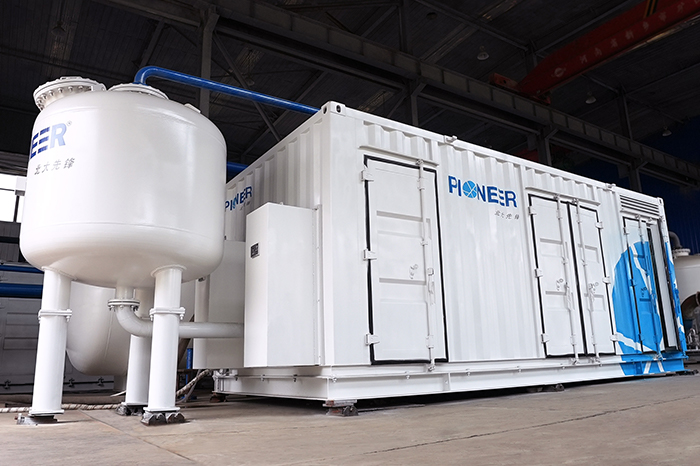
PKU Pioneer is a specialist in VPSA oxygen generation systems and PSA carbon monoxide separation plants, boasting extensive experience in industrial applications. We has exported VPSA/PSA systems to over 20 countries and regions, serving 30+ industries with proven expertise. Our CE-certified containerized SPOX VPSA-O2 generator has been exported to Italy and the will be built in the US. PKU Pioneer will continue to lead the industry in providing efficient, sustainable, and customized oxygen solutions to meet the unique needs of more clients.